


Worms in the human body develop as a result of the penetration of parasitic multicellular microorganisms.There are many types, each causing its own symptoms.If parasites are detected, treatment must be started.An infectious disease specialist will tell you how to get rid of worms using drug therapy and traditional methods.
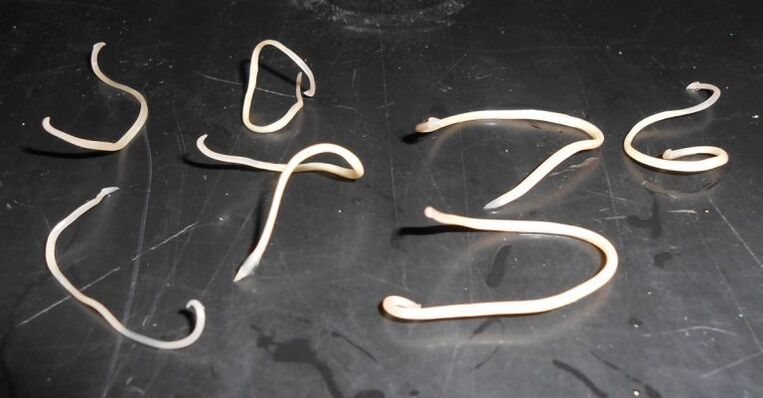
Variety of parasites
Worms: what are they?These are parasitic worms that live in the bodies of humans and some animals.They have different shapes and sizes.They attach to the mucosal surface using suckers, hooks and flagella.It can penetrate muscle tissue.
There are three types of parasites:
- Nematodes.Scientifically, worms are called nematodes.In humans, worms present in the body most often attack the intestine.
- Flat tapeworms (tapeworms).
- Trematodes (flukes).In humans they are located in most cases in the liver and biliary tract.
There is another classification that will help answer the question of what causes worms.
- Contact worms (pinworms and dwarf tapeworms).Helminth infestation occurs through contact with a person suffering from helminthiasis.Helminths enter the human body together with dust, through household items and personal hygiene items.
- Biohelminths (nematodes, tapeworms, trematodes, porcine and bovine tapeworms, echinococci).Worms appear in humans along with dirty and poorly washed food, as well as poorly heat-treated meat.You can get the infection through unboiled, unfiltered water.
- Geohelminths (nematodes, whipworms).Worms enter the soil together with animal feces.The likelihood of worm infection increases when working in the soil or while relaxing in nature.If hygiene rules are not respected, the larvae enter the person's mouth and unpleasant symptoms may appear.
Each type of worm is localized to a specific internal organ of a person, causing the corresponding symptoms.To answer the question of how to get rid of worms, you need to undergo an examination.Symptoms and treatment of worms in adults depend on which group the detected helminth belongs to.
Frequent inhabitants of the human body
Most often, the following diseases that cause worms in humans are detected:
- Roundworms cause ascariasis.Helminths in humans enter the body along with dirty fruits, vegetables and berries.
- Diphyllobothriasis develops against the background of the appearance of a large tapeworm in the body.The source of infection is lightly salted, poorly dried and insufficiently heat-treated fish.
- Pinworms cause the disease enterobiasis.Most often, helminth infestation occurs through contact and household contact.
The incubation period lasts 1-2 months.If the wrong treatment was chosen, after another 2 months helminthiases enter the chronic phase.
Signs of colonization of the body by worms
Each type of helminth has its own specific symptoms.The following parasites most often enter the human body.
- Signs of worms in humans with ascariasis: a rash appears on some areas of the skin, abdominal pain, nausea, sometimes even vomiting, decreased appetite.The level of eosinophils in the blood increases.Symptoms of helminth infestation in severe cases manifest themselves in the form of peritonitis, appendicitis, intestinal obstruction and liver disease.The first signs of the presence of worms begin to appear 3 days after infection.
- With diphyllobothriasis the following symptoms of worms in humans are distinguished: the first signs of the appearance of worms may appear in the form of weakness, a constant feeling of tiredness;dizziness, nausea, stool disorders, diarrhea alternating with constipation occur.Symptoms of helminthiasis in adults are manifested by weight loss and pain in various parts of the abdomen.Signs of helminth infection are complemented by a decrease in hemoglobin and anemia develops.The first signs of worms appear 6 months after infection.
- Enterobiasis.Signs of worms in an adult are itching in the anus, which intensifies at night.Symptoms in adults are complemented by abdominal pain.The incubation period can last 2-3 weeks.
How can you tell if a person has worms?General symptoms of worms in adults:
- symptoms of infection in the form of skin rash, skin itching, dry cough;
- with worms, swelling of some parts of the body develops;
- Worms in an adult can cause the following symptoms: increased body temperature, chills, convulsions;
- helminth infestations lead to swollen lymph nodes;
- helminths in adults lead to pale skin and weakness;
- in humans, the symptoms of worms manifest themselves as pain not only in the abdomen, but also in the joints and muscles;
- Common symptoms of helminthiasis include flatulence, increased gas production, constipation, or diarrhea.
Helminthic invasion leads to damage not only to individual internal organs, but also to entire systems.What symptoms do you experience?There is a malfunction in the functioning of the cardiac, vascular and nervous systems.
Laboratory detection methods
A person has worms: how to find out if there are no external manifestations?Diagnostics is performed on the basis of the delivery of various biomaterials to the laboratory.
- Stool for worm eggs.
- A curettage of the anal area will help determine if there is an infection.
- Immunological tests will help determine the presence of worms.They detect a specific type of M or G antibody.
- Stool analysis for dysbacteriosis.In most cases, a decrease in the level of E. coli and bifidumbacteria is observed.
- An abdominal ultrasound is performed to detect pathological processes in the organs of the digestive system.
- How to determine by a general blood test?The level of leukocytes, eosinophils, lymphocytes and ESR increases.
Based on the examination data, drugs are prescribed that will help expel parasites from the body.
Therapeutic measures
How to remove worms from humans?Before taking anthelmintic drugs, it is necessary to remove the body's intoxication caused by waste products of parasites.The following groups of drugs can be prescribed for this purpose.
- Hepatoprotectors help restore the functioning of the liver and gallbladder.
- Antihistamines will help get rid of itching, swelling and cough.
- Enzyme preparations help the digestive tract to break down food and digest it completely.
- Choleretic drugs will help clear the ducts and relieve pain.
- Treatment of helminthiasis begins with taking adsorbents, which will cleanse the blood and intestines of toxins and reduce the manifestations of allergies (activated carbon).
The preparatory phase can last from 7 to 10 days.And only after that they begin a course of taking anthelmintic drugs.They may contain synthetic or vegetable components.Traditional medicine does not stand aside.
If there are worms, how to remove them from a person with the help of drugs?Anthelmintic drugs can have a broad or narrow spectrum of action.The most effective and appropriate drug is chosen by the doctor.
How to treat worms after the main course of taking anthelmintic drugs?After the main course, which lasts 3-5 days, the recovery period begins.At this time, you should be treated with anti-inflammatory drugs, vitamin-mineral complexes and immunomodulators.
Treatment of worms includes all kinds of decoctions, enemas and ointments based on traditional medicine recipes.How to cure worms?The most famous and effective recipes include pumpkin seeds, garlic, onions, peppers and herbal ingredients: tansy, cloves, wormwood.
Preventive measures
How to treat worms, in addition to drug therapy?Preventive measures will help avoid infection, and during treatment will speed up the healing process and reduce the manifestation of symptoms.
- If there are pets in the house, it is necessary to monitor their health and carry out timely prevention against worms and fleas.Keep your pet's litter box and food bowl clean.After contact with your pet, wash your hands with soap.
- Before eating wash food, it is recommended to pour boiling water over fruits and vegetables.
- Meat and fish should be well boiled or fried.
- Maintain hygiene, wash your hands after going to the bathroom and after working with soil.
- Filter or boil the water.
To prevent infection of other family members and cause serious complications, it is necessary to maintain hygiene and start adequate treatment in time.The test will determine the degree of infection and the type of parasitic organism.
Worms in humans: symptoms in adults and how to identify them
Symptoms of worms in humans do not appear in the early stages.In order for the clinical picture of the disease to develop, the parasitic worm must reproduce.In the initial stages of the disease, no specific signs are observed, since the larvae are not capable of parasitism.
Periodic allergic skin rashes and itching in the anus are difficult to "associate" with helminth infestations, so treatment of helminths is not carried out.Doctors also often make mistakes by making incorrect diagnoses.Only after the pathology has gone untreated for a long period do specialists begin to suspect the presence of parasites in the intestine, liver, lung tissue or brain.Laboratory confirmation of their presence is not difficult.You will learn more about the symptoms, pathogenesis and treatment of helminthiasis in the article.
Symptoms of the presence of worms in an adult
Worms in humans cause a variety of symptoms.If they are identified, it is possible to determine the invasion in the early stages, thus avoiding diagnostic errors.
The main symptoms of helminth infection:
- Allergic skin rashes in the form of eczematous spots, urticaria, acne, boils and papillomas;
- Frequent cough that is not treated with expectorants and traditional antibiotics;
- The appearance of pneumonia, runny nose and other symptoms of inflammatory changes in the upper respiratory tract.These manifestations are characteristic of ascariasis and strongyloidosis;
- Difficulties in passing stool through the intestine (constipation) occurs when helminth clots accumulate in the intestinal cavity.If the worms are long, they block the secretion of bile and pancreatic juice.This condition manifests itself clinically with diarrhea, constipation, bloating;
- Frequent colds due to decreased immunity;
- Nervousness due to constant digestive problems;
- Teeth grinding occurs due to increased activity of the nervous system;
- Depression is observed against the background of chronic blood poisoning with waste products of worms;
- Joint pain occurs when parasites move throughout the body and damage tissues.
Therefore, helminth infestation in an adult causes a number of symptoms, in the presence of which the doctor can determine the parasitism of foreign agents.Difficulties in making a diagnosis are caused by isolated symptoms that are not specific to parasitic worms.
Symptoms of worm infection in children
Symptoms of worm infection in children (ascariasis, diphyllobothriasis, opisthorchiasis) are specific.A qualified doctor will be able to determine that the child has a parasite in the intestines by the following signs:
- Increased activity of the child;
- Itching in the anus;
- Drool during sleep and in the morning;
- Abundant amounts of saliva in the mouth;
- Craving for sweet foods;
- peeling of the eyelids;
- Dry hair, brittle nails;
- Anemic syndrome of unknown etiology;
- Drowsiness and lethargy;
- Frequent colds.
If 3 or more of the symptoms listed above are observed, it is very likely that the child has worm parasitism.
Pathogenesis of symptoms of helminth infestation in children and adults
The most common symptom of helminth infestation in adults and children is gastrointestinal pathology.Most parasites live in the intestine, infect its walls and release toxic products of their vital activity.For the purpose of active reproduction, they lay eggs in the intestinal cavity, lung tissue and brain.
During the active phase of reproduction, it is easy to determine whether a person has worms.You need to get tested for eggs.With opisthorchiasis in the anus in children, you can detect them independently.For these purposes, you need to temporarily attach adhesive paper or tape to the skin in the anal area.If a child has opisthorchid eggs, they will stick to the surface.
Worms in humans cause symptoms such as nausea and vomiting due to the release of waste products in the intestine.Some species secrete hormones that cause malabsorption of fluid in the intestinal wall, leading to diarrhea.
The above symptoms may be mild, so treatment is not carried out.When a disorder in intestinal activity develops, a person can be sent to the infectious diseases department, since the clinical manifestations of the disease resemble gastrointestinal poisoning.
Infection with some types of worms leads to neurological symptoms.A similar clinic is often observed in children.They become aggressive and irritable with ascariasis and diphyllobothriasis.The pathology develops due to poisoning by toxic substances formed during the life of parasites.When toxins are absorbed into the blood and enter the brain, they damage nerve cells.The duration of the disease determines the severity of clinical symptoms.Headaches and dizziness are a consequence of blood poisoning.
Joint and muscle pain is formed according to a similar pathogenetic pattern.Pathological changes in skeletal muscles are also observed against the background of Trichinella parasitism.The worm is encapsulated in muscle tissue and can remain there for a long time, awaiting conditions favorable to life.Treatment with painkillers and anti-inflammatory drugs does not lead to the elimination of parasites.
Low body temperature due to helminth infestation in humans occurs for many reasons:
- Blood poisoning;
- Destruction of the brain and internal organs;
- Anemic syndrome;
- Neurological disorders;
- Allergy.
Allergic reactions with giardiasis in children and adults are observed more often.This parasite produces a large number of toxins.They prevent the functioning of the kidneys and liver, ensuring the accumulation of metabolic products in the blood.Up to a certain point the immune system is able to cope with the disease, but at a certain point it "fails".The consequence of this situation is the formation of antibodies not only against foreign substances, but also against one's own tissues.According to this scheme, a person develops arthritis.
What allergic symptoms are observed with giardiasis:
- Dermatitis around the mouth;
- Acne and pimples;
- Psoriasis;
- Herpes on the lips;
- Neurodermatitis.
Allergies can be local or general.Local manifestations are itching of the skin, dry cough, asthmatic narrowing of the bronchi.Common reactions with giardiasis: rhinitis (inflammation of the nasal membrane), bronchial asthma, cracked nails, brittle hair.
Against the background of a decrease in the functions of the immune system, diseases such as sinusitis (inflammation of the paranasal sinuses), stomatitis, vulvovaginitis and bacterial vaginosis are formed.
Pinworm in children is accompanied by sleep disturbances and night snoring.Such signs of the disease are caused by nervous reactions when brain tissue is damaged.
How to determine what worms a person has
Before telling you how to determine whether a person has worms, we will highlight the most common representatives.
Infection with luminal forms of pathogens causes pathology of the gastrointestinal tract.There are approximately 100 types of agents that live in the intestine.The most common luminal worms:
- Broad tapeworm;
- pinworms;
- Dwarf tapeworm;
- Hookworms;
- Whipworms;
- Filariasis;
- Cysticercosis;
- Paragonimiasis.
The easiest way to identify pinworms.They emerge from the anus on their own during the night.They lay their eggs on the surface of the skin between the buttocks.To identify the pathogen, simply collect a cast from the surface of the skin above the anus and examine it under a microscope.
Other types of parasites are determined by stool analysis.It should be collected a few hours after the meal, when the worms increase in size.
With diphyllobothriasis, trichocephalosis and schistosomiasis, an anemic syndrome is formed.It is detected in a general blood test by a decrease in the amount of hemoglobin and red blood cells.All luminal forms lead to the appearance of dysbiosis (imbalance between normal and pathogenic flora).If changes in the intestinal flora are not treated, a helminth infestation can be assumed.In such a situation, it is better to take a prophylactic dose of the medicine.It won't hurt much, but it will get rid of the parasites.
Roundworms attack the lungs and intestines.Infection with the pathogen is accompanied by an increase in temperature.A person coughs with yellow sputum.Blood can be found in it.Microscopic analysis of secretions released from the upper respiratory tract reveals roundworm larvae.
Against the background of a thermal reaction, "volatile infiltrates" appear in the lungs.They are detected by taking a chest x-ray.At this point, a complete blood count shows an increased number of eosinophils.In the second phase of the infection, when the pathogen multiplies in the intestine, the release of trypsin and pepsin decreases.These enzymes are responsible for the digestion of proteins.The study of the concentration of the contents of intestinal juice allows us to indirectly judge the pathological infection.
Against the background of ascariasis and clonorchiasis, a person can develop obstructive jaundice.Against the background of the accumulation of parasites, the secretion of bile becomes difficult with the formation of biliary dyskinesia.Most helminthiases lead to liver and kidney damage.
Trichinosis manifests itself with muscle pain, fever, swelling of the eyelids and face.Parasitic diseases such as fascioneliasis, clonorchiasis and opisthorchiasis are accompanied by damage to the gallbladder with the formation of jaundice syndrome.Against the background of the pathology, an enlargement of the spleen and liver appears.
Strongyloidosis manifests itself in a variety of syndromes.Against the background of pathology, allergic reactions and dyspeptic disorders occur in the gastrointestinal tract.When studying the biochemical state of blood in jaundice syndrome, an increase in the amount of bilirubin and liver enzymes (AlAt, GGTP, AsAt) is observed.
Test to find out if a person has worms
The test to find out if a person has worms is based on a careful study of the pathological symptoms of the disease.Answer the questions:
- Do you experience itching in the anus?
- Are there any skin rashes?
- Do you experience nausea and vomiting?
- How often does swelling occur?
- Are there any sleep disorders?
- How often does bitterness appear in the mouth?
- Are the lymph nodes swollen?
- Do you experience muscle pain?
If 7 affirmative answers are given to the test questions, the presence of a helminth infestation can be assumed with a high degree of certainty.
When a person has worms, the symptoms described above are observed during the active phase of the infection.The number of individuals at this level is large, so they actively influence the body.
Treatment of helminth infestations: tablets and common methods
Most drugs are prescribed by doctors after identifying the type of pathogen.
When choosing tablets, you should pay attention to the fact that most drugs destroy only adult individuals and have no effect on the larvae.
Among the folk remedies we can recommend treatment with seeds and tansy.It has been known since ancient times that pumpkin seeds have a good anthelmintic effect.For a therapeutic effect, you need to eat 300 grams of seeds within an hour and then do a cleansing enema.Repeat the procedure on the second day.
By maintaining hygiene and regular prevention of helminthiasis, you can effectively protect yourself from pathology!